Leisure battery buying guide - lithium LiFePO4 vs AGM for off-grid camping

Lithium leisure battery

Off-grid power guide

What Battery?

If you camp off-grid for more than a couple of nights, your battery makes all the difference. The right one keeps the fridge cold, the lights on and the phones charged, with no hook-up needed.

POWER

Power Freedom

Your leisure battery is the heart of every off-grid setup. Solar panels, a diesel heater, a fridge, a phone charger: they all live or die by the battery behind them.

Buy the wrong one and you'll be counting volts by day two. Buy the right one and you'll forget it's there. This guide shows you which type to choose, how much capacity you really need, and the few extras that make it all work safely.

Lithium LiFePO4

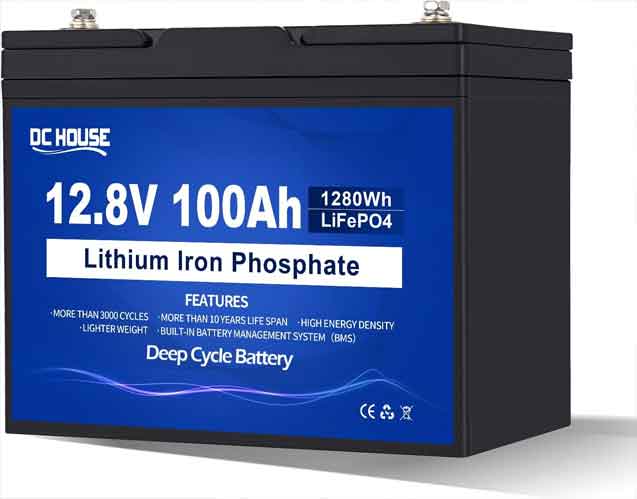
We recommend Lithium LiFePO4 leisure batteries over the alternatives. They give you far more usable power, they're lighter and smaller, and they last much longer.

With a 100Ah lithium battery you can use close to the full 100Ah. With many other battery types, going much past half the rated capacity starts to shorten the life of the cells.

Lithium LiFePO4 leisure battery
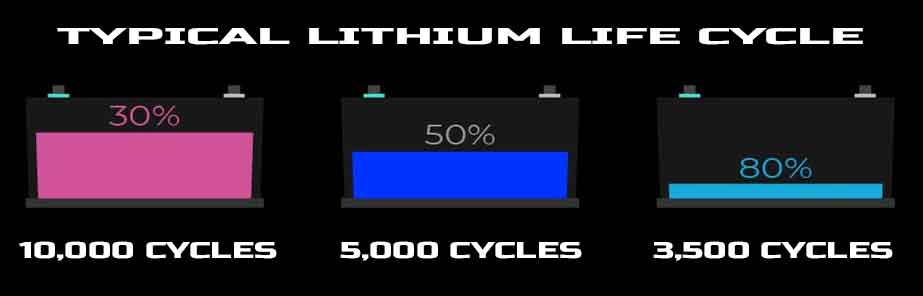
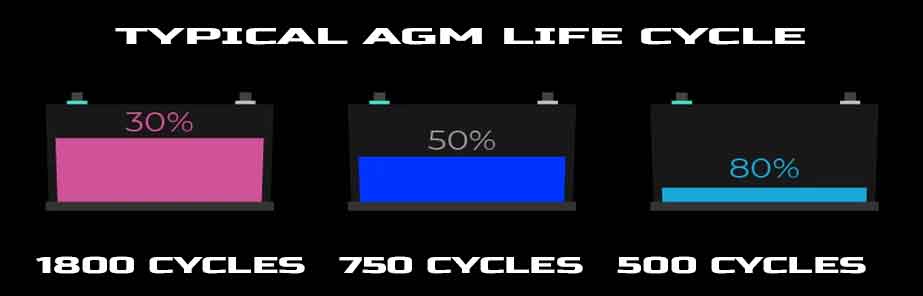
Battery cycle life comparison chart

Lifespan

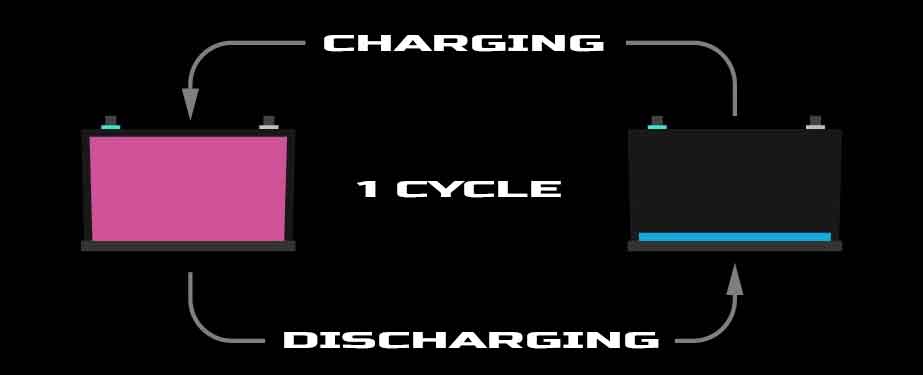
Manufacturers usually class a battery as worn out when it can only hold 80% of its original capacity. Here we count a 50% discharge as one cycle.

Compare the cycles each battery type can handle and the long-term value becomes clear. Lithium costs more up front, but it can pay for itself surprisingly quickly.

Usable Power

The difference between battery types isn't small. LiFePO4 batteries give you much more usable energy and keep performing strongly far longer than the alternatives.

On average lithium can deliver around seven times more usable power over its lifetime, which is why it's become the go-to choice for serious off-grid setups. It also holds its voltage steady, so lights don't dim and pumps don't slow as it drains.

Lithium battery discharge chart
AGM battery discharge chart

Standard AGM

AGM batteries still do a job, but they can't compete with lithium on usable capacity, depth of discharge or life expectancy. They're also around twice the weight for the same capacity.

If you want a setup that feels more capable and less restrictive when you're away, lithium is the upgrade that makes the biggest difference.

Not All Lithium Is Equal

Some LiFePO4 batteries are rated for around 4,000 cycles, others for 15,000 deep cycles, so look beyond the Ah figure on the listing.

Check for a built-in BMS (battery management system), which protects the cells from over-charging, over-draining and short circuits. The cheapest battery is rarely the best value: lifespan, reliability and total usable energy matter just as much as price.

LiFePO4 lifecycle comparison

How Much Battery Do You Need?

Add up what you'll use in a day. These are rough daily figures for typical 12V kit; your own gear will vary.

25-45Ah12V compressor fridge
10-20AhDiesel heater overnight
5-10AhLaptop charge
3-6AhLED lights for the evening
1-2AhPhone charge, each
1-2AhWater pump

Add 20% headroom and allow for cloudy days. Most weekend campers are well served by 100Ah. If you run a fridge, a heater and a laptop for a week, look at 200Ah, or two 100Ah batteries linked together.

WHAT WE USE

100Ah LITHIUM LiFePO4

15,000 DEEP CYCLES
BUILT-IN BMS

If you want a starting point, this is the type we'd choose: 100Ah of LiFePO4 with a long cycle life and a built-in BMS. One is enough for most setups, and heavier users can link two or more together for extra capacity.

Complete Your Setup

A great battery is only as good as the kit around it. These are the extras we'd fit on day one, and why each one earns its place.

Charge while you drive

DC-DC Battery Charger

Charges your leisure battery from the engine while you drive, so you arrive on site with a full battery.

Why it matters: Lithium batteries need a proper DC-DC charger. An old-style split-charge relay won't charge them fully and can overwork your alternator.


Your fuel gauge

Battery Monitor

A shunt-based monitor shows exactly how much charge is left, what's going in and what's coming out, right on your phone.

Why it matters: Lithium holds a steady voltage until it's nearly empty, so a simple voltmeter can't tell you much. A monitor stops the lights going out unexpectedly.

Top up at home

Lithium Mains Charger

Charge up on the drive before a trip, or keep the battery healthy through the winter.

Why it matters: Choose a charger with a LiFePO4 mode. Lead-acid chargers use the wrong voltages and can stop short of a full charge.

Off means off

Battery Isolator Switch

One twist cuts every circuit, perfect for storage, maintenance or a quick reset.

Why it matters: Small hidden loads such as trackers, alarms and USB sockets slowly drain a battery while the van is parked up.

Essential safety

Main Fuse Or Breaker

Fit a main fuse or breaker as close to the battery's positive terminal as you can.

Why it matters: A 100Ah lithium battery can deliver a huge current into a short circuit. The main fuse protects every cable in the van.

Do it once, do it right

Battery Cable & Lugs

Short, thick, properly crimped cables between the battery, fuse and bus bars.

Why it matters: Undersized cables get hot and waste power as heat. Good cable means your inverter and heater get every amp they need.

Tidy wiring

Bus Bars

Positive and negative bus bars give everything a neat, labelled place to connect.

Why it matters: Stacking lots of lugs on the battery terminals causes loose, hot connections. Bus bars make fault-finding easy, and every circuit you add needs its own fuse.

No inverter needed

12V USB-C Sockets

Fast-charge phones, tablets and even laptops straight from your battery.

Why it matters: Charging over 12V skips the inverter, which can waste a good share of your power as heat. Your battery lasts noticeably longer.

Winter campers

Self-Heating Lithium

Planning winter trips? Some LiFePO4 batteries include built-in heating pads.

Why it matters: Lithium mustn't be charged below freezing. Self-heating models warm themselves first, so solar and driving can still charge them on frosty mornings.

More Off-Grid Guides

Power, heat and cooling: everything that lets you camp anywhere, in any season.

Coming Events

We have 5 fabulous events throughout the school holidays every year.

Come along for the weekend, or enjoy the whole event.
It's up to you.

The Big Spring Gathering Hampshire 2027 Easter Special Family Music Festival 1st - 11th April
HAMPSHIRE
Staffordshire Rocks 2027 Family Music Festival 28th May - 6th June
STAFFS LAKES
North Nibley 2027 Family Music Festival 25th July - 1st August
COTSWOLDS
Camper Live North Wales Family Music Festival 2027 8th - 15th August
NORTH WALES
Lincolnshire Summer Sounds 2027 Family Music Festival and lakeside campsite 23rd - 29th August
LINCS LAKES

Hope This Helps

We hope this guide helps you plan a setup that works for you. Shop around, take your time, and ask us if you're unsure about anything.

Got a question, or a tip that would help other campers? Send it to us and we'll add it to the guide.

As an Amazon Associate, Wild Festivals earns from qualifying purchases. Links on this page may earn us a small commission at no extra cost to you, which helps keep our festivals affordable. Prices and availability change, so always check the listing.